Polygenic Score for T2D Prediction in Indigenous Cohorts
Diabetologia
Resumen
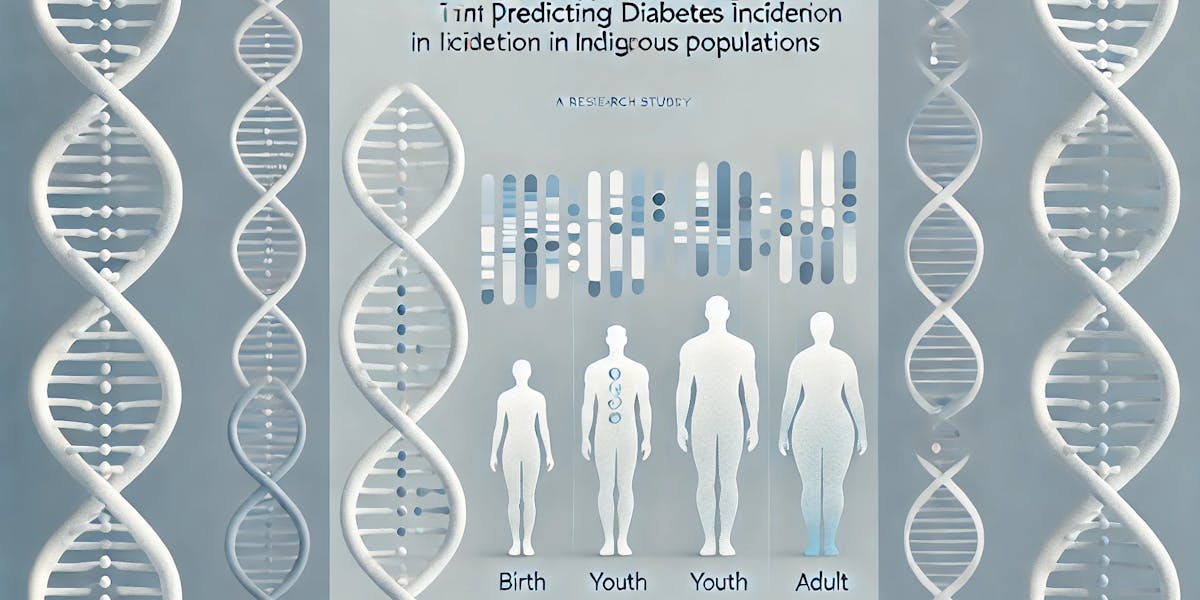
This study evaluates the contribution of polygenic scores (PS) based on genome-wide association studies (GWAS) in predicting the incidence of type 2 diabetes among Indigenous populations in the Southwestern USA. The research focuses on three distinct cohorts: birth, youth, and adults. Results show that the PS, constructed from European-ancestry GWAS data, significantly enhances predictive accuracy when combined with clinical variables such as BMI, HbA1c, and fasting plasma glucose (FPG). Furthermore, the study highlights that genetic effects on diabetes risk are more pronounced in younger age groups, indicating that early-life genetic screening could aid in preventive strategies. The decision curve analysis revealed that adding PS information can improve risk stratification and guide preventive interventions, especially in populations where clinical predictors are limited.
Diseño del Estudio
Intervenciones
Tipo de Estudio
Resultados
Duración y Tamaño
Población del Estudio
Geografía
Metodología
The study utilized a longitudinal design involving 7701 genotyped participants from an Indigenous population. Three cohorts were analyzed, with genotypic data imputed against whole genome sequence data. PS construction involved selecting significant genome-wide variants.
Statistical analyses included Cox regression, ROC curves for AUC assessment, and NRI calculations. Decision curve analysis assessed the clinical utility of incorporating PS into risk prediction models, showing improved prediction in younger cohorts.
Intervenciones
The intervention involved calculating polygenic scores for type 2 diabetes using various GWAS-derived variant sets. The DIAGRAM 2018 PS showed the highest predictive value across cohorts.
Hallazgos Clave
The DIAGRAM 2018 PS significantly improved type 2 diabetes risk prediction when combined with clinical variables. Genetic factors were more predictive in younger cohorts, suggesting early screening benefits. The most notable improvements were observed in the birth cohort.
Comparación con otros Estudios
Compared to previous European-ancestry studies, this research highlighted the effective cross-population application of PS. The study underscores PS's potential for broader applications in diverse populations, especially for early risk identification.
Referencia de la Revista
Wedekind LE, Mahajan A, Hsueh WC, et al. The utility of a type 2 diabetes polygenic score in addition to clinical variables for prediction of type 2 diabetes incidence in birth, youth and adult cohorts in an Indigenous study population. Diabetologia. 2023;66(4):847-860. doi:10.1007/s00125-023-05870-2
Relacionados y Discusiones
Key References
Most relevant evidence and guidance related to this research.
Supporting Evidence
Supporting evidence and related resources.
Integrating Polygenic Risk Scores in Clinical Practice
Polygenic Risk Scores in Diverse Populations
Bupa to offer first genetic test for disease prediction in UK
Aspiring Parents Have a New DNA Test to Obsess Over
The utility of a type 2 diabetes polygenic score in addition to clinical variables in an Indigenous population
A Polygenic Score for Type 2 Diabetes Improves Risk Stratification and Predicts Future Diabetes
30 total sources in this category